
When rent rises faster than a fixed retirement income, everyday bills can feel overwhelming for older adults and families. You may have watched a parent struggle to pay for both food and utilities. It is hard to forget. Many families also worry about keeping a safe place to call home. Exploring low income senior housing gives your family a practical starting point without adding extra stress. A steady roof overhead protects health, daily routines, and peace of mind, which matters more than most people realize. Even simple steps taken now can help you feel more prepared and supported.
Federal and state programs help older adults pay less for safe, steady homes through affordable senior housing. Most of these programs tie rent to what a resident actually earns rather than to market prices. Rules vary by building and county, so learning the basics first helps you plan elder care for your family without guesswork.
Many seniors rely on housing programs supported by public funding. The rules differ from one program to the next, yet each one aims to keep monthly rent within reach.
Section 202 Supportive Housing: Built for adults aged 62 and older with very low incomes, it generally pairs reduced rent with a service coordinator.
Project-Based Section 8: With this program, the help stays with the unit, which keeps rent close to 30 percent of adjusted income during your stay.
Housing Choice Vouchers: Eligible renters can apply subsidies toward private apartments or shared units wherever landlords accept them.
Senior Public Housing: Managed by local housing authorities, it offers income-based rent for older adults who meet local limits.
Eligibility usually comes down to three things: your age, your household income compared to the local area median, and the asset rules. Property managers will also want proof of income, citizenship or eligible status, and your rental history. They check all of it before approving an application.
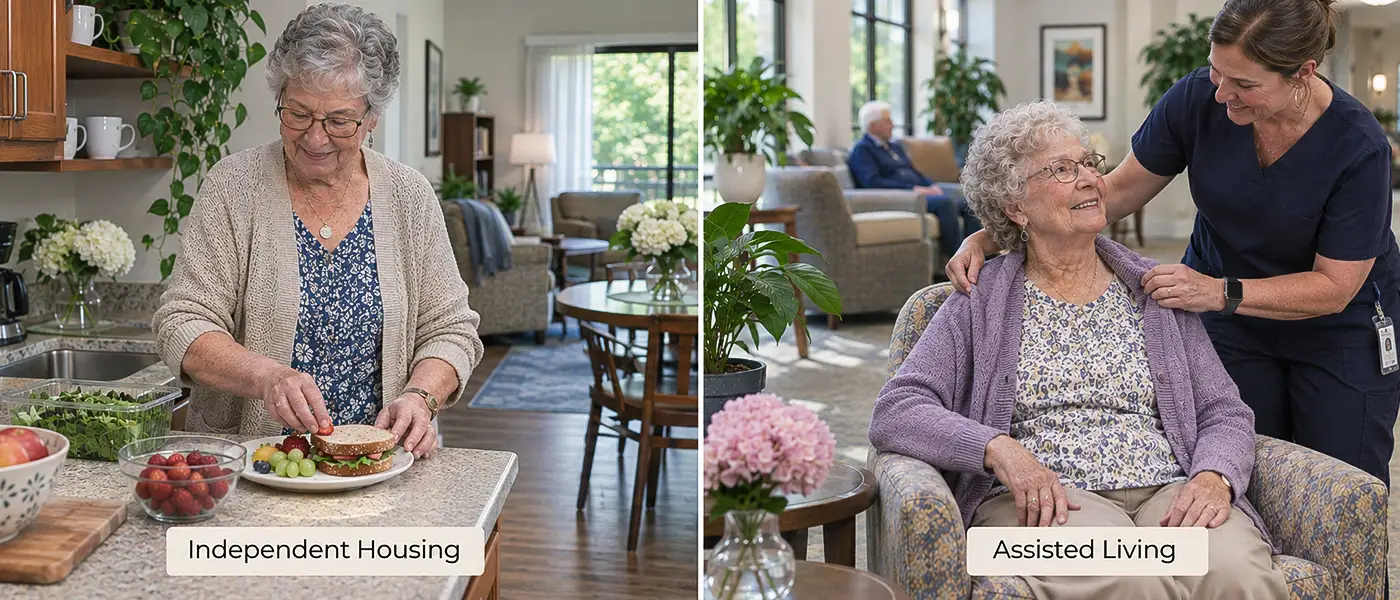
Families feel torn between basic rent help through low income senior housing and a place that offers daily care. Some seniors mainly need a quiet, budget-friendly apartment with grab bars and an elevator. Others need help with meals, bathing, medication reminders, or company throughout the day.
Low cost senior housing tends to work best when a senior can still handle daily tasks without help. An independent apartment keeps monthly expenses down, particularly when the rent covers part of the utilities. That leaves more of their retirement income for the things they enjoy, like good food, a little travel, or a favorite hobby.
Health can change overnight after a fall, a hospital stay, or memory problems. A home that feels comfortable today may become hard to manage soon. Talking about future needs now helps your family avoid rushed decisions later.
Some seniors reach a point where daily support is no longer optional, and living alone gets riskier. Assisted living helps here. Residents get meals, personal care, and organized activities in one community. However, money adds to the worry. Add growing care needs on top of that, and families feel the strain fast.
Assisted living costs more than HUD-backed rent programs, but that doesn’t mean families are left on their own. Medicaid Home and Community-Based Services waivers, veterans aid, and local grants can ease care expenses in many states. Once you add up the full monthly picture, it becomes much clearer which option truly fits your budget.
Key Factor | Low Cost Senior Housing | Assisted Living |
Daily Living | Independent living | Hands-on personal care and meals |
Main Cost | Income-based rent | Monthly rent plus care fees |
Top Programs | HUD and local housing authorities | Medicaid waivers and veterans aid |
Best For | Tight budgets with minimal care needs | Growing daily health or safety needs |

Sorting through brochures, eligibility charts, and phone trees can leave anyone worn out. You do not have to solve every detail in one afternoon. Breaking the search into small steps keeps both you and your loved one steady.
Sit down with your loved one and ask what matters most to them. Find out which parts of their daily routine they enjoy and which parts leave them tired or uneasy. As you listen, you will start to see whether a private apartment or a bit more daily help means more to them.
Keep the conversation gentle and respectful, especially if your loved one doesn’t like asking for help or is slow to open up. Rather than pushing one option, simply share what you have seen, whether it is the stairs, the bills, or the loneliness. When you tackle it together, trust grows, and worry fades.
Gather basic paperwork in one folder so applications move faster. Having birth certificates, Social Security award letters, bank statements, and tax forms ready saves extra trips. Keep a simple notebook with dates, names, and phone numbers for every office you contact.
Along the way, check with local agencies on aging, senior centers, and community nonprofits. Many local groups help families fill out forms without charging a fee. They can also point out elderly housing options that fit your loved one’s health and budget.
A good housing plan looks beyond the move. It should also consider how comfortable the place will feel a year from now. An apartment that seems easy today might become lonely or hard to get around later. Taking time to check the building rules, transit access, and nearby clinics can save your family from another move down the road.
When you compare senior low income housing with other care settings, think about how daily life actually feels there. Ask how quickly maintenance requests get handled, and how safe the walkways and halls are in bad weather. Pay attention to whether staff greet residents warmly and treat them with respect.
Take a look at the neighborhood too, including bus stops, grocery stores, and pharmacies. Easy errands help an older adult feel part of the wider community. Little things like bright lighting and step-free entries add up to a lot over time.
It also helps to prepare for the feelings that come with a move, not only the costs and the floor plan. After decades in one home, a parent may feel sad, anxious, or resistant, especially if they don’t like asking for help. Make room for those feelings, and gently remind them that getting support is a wise choice.
Touring communities together and seeing the common areas can ease much of that worry. Familiar items such as family photos, a favorite quilt, or an old armchair help a new room feel like home. Patience matters most during a big change like this.
Cost is important, but a lower price should never come at the expense of warmth, safety, or companionship. Older adults flourish when they feel valued, needed, and surrounded by people who care. The best search balances what fits the budget with what makes each day better.
As you explore affordable senior housing, look at what the monthly rate actually covers and what would come out of your pocket separately. A higher rate may include meals, utilities, and activities that add up quickly elsewhere. Going through each fee list with care helps your family steer clear of surprise charges.
Ask clear questions about rent increases, guest policies, and what happens if care needs grow. Clear answers from the start help your family plan the budget with confidence. Before you sign a lease or agreement, you have every right to know the facts.
Finding low income senior housing or a supportive care home takes patience, clear facts, and steady attention to your loved one’s daily comfort. At Goose Creek Manor, our community-first approach in South Carolina centers on compassionate assisted living and personalized care. We offer varied meals and engaging daily activities, so residents stay active and feel truly at home. Connect with Goose Creek Manor when you want guidance on supportive senior living for your loved one.
Start with your local public housing authority, and try the HUD resource locator to find nearby options. Your area agency on aging can also tell you which waitlists are open right now.
Your limit depends on your county’s area median income and the size of your household. Most programs set the cutoff at 30, 50, or 80 percent of the local median income. For example, in Goose Creek (Berkeley County, SC), HUD’s 2026 annual limits for a single-person household are $24,700 at 30 percent, $41,150 at 50 percent, and $65,800 at 80 percent.
Yes, a little savings will not automatically rule an older adult out. Housing programs look at liquid assets and interest income, along with monthly benefits such as Social Security.
Income-based housing helps keep rent low for seniors who live on their own, and some places include a service coordinator. Assisted living goes further by providing personal care, meals, and everyday support in a community setting.
The first step is simply talking with your parent, with no pressure. Once you know what they want, collect the financial papers you will need. Your local aging office can guide you through the rest.