We often find ourselves choosing the right activities for seniors to keep them engaged and enjoying. Jigsaw puzzles for adults are touted as one of the most rewarding workouts. Not only are they fun and engaging, but they also offer profound health benefits such as enhanced brain activity, creative thinking and increased focus, among many others. Jigsaw puzzles are excellent activities that help older people spend their free time and enjoy a sense of achievement.
Whether alone at home or part of a group in an assisted living community, playing jigsaw puzzles is a great medium for hours of entertainment. With different sizes, designs and difficulty levels, Jigsaw puzzles can trigger individual interests and abilities. Our blog below lists the benefits of Jigsaw puzzles and some of the best brain games for seniors that can create a more enjoyable experience for them.
Jigsaw puzzles offer a variety of benefits, ranging from substantial cognitive, psychological and physical benefits for the elderly. Here is a list of potential benefits of playing Jigsaw puzzles:
When playing a jigsaw puzzle, one needs to recognise shapes, identify patterns, compare colours and memorise where different patterns are kept. These activities act as exercises for the brain and encourage mental stimulation and enhanced concentration.
When an elderly person plays a jigsaw puzzle, they work toward a goal. Playing a jigsaw puzzle requires attention to detail and increases the challenge level as one keeps playing. This helps to build better focus and increase concentration, especially in senior citizens.
Playing jigsaw puzzles is an entertaining way to spend free time with your friends and family. It allows seniors to break free from their daily routine and focus on enjoying a good game of jigsaw puzzle with their friends.
Jigsaw puzzles for adults are all about remembering where the pieces of the puzzle are and lifting them and putting them in the right place. This can really help senior citizens suffering from arthritis and poor eyesight or restricted hand movement.
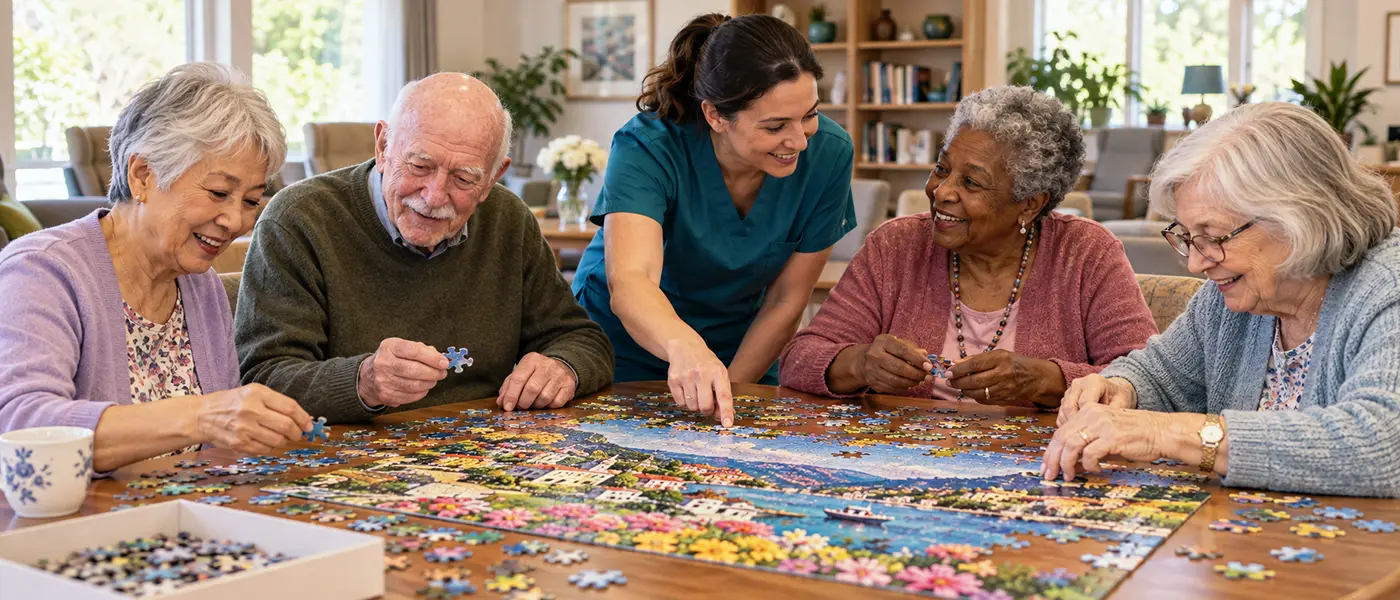
Playing jigsaw puzzles with a group is far more delightful than playing it alone. If you are living in an assisted living community, group puzzle sessions encourage positive conversation, exchange of ideas and a sense of belongingness.
Choosing the right memory games for seniors can be a great cognitive exercise and offer therapeutic benefits. Here is a list of the best types of Jigsaw puzzles for seniors.
Large-Piece Jigsaw Puzzles
Large-piece jigsaw puzzles are the most popular and practical as they are easier to see, hold and assemble. People with visual impairment, reduced dexterity and seniors can enjoy this type of jigsaw puzzle easily. Bigger pieces are easy to identify and easier to move, which initially makes the game more enjoyable.
Easy Jigsaw Puzzles With Fewer Pieces
Jigsaw puzzles with fewer pieces take less time to complete and feel less overwhelming. With fewer pieces to assemble, this Jigsaw puzzle type is one of the most popular choices for seniors to avoid exhaustion and boredom.
Nature and Landscape Puzzles
Certain elders enjoy nature and landscape puzzles such as pictures of gardens, forests or beaches as they are visually appealing. Solving landscape puzzles may promote a sense of patience and a relaxed state of mind.
Personalised Photo Puzzles
Personalised photo puzzles promote emotional effects on individuals. This type of jigsaw puzzle helps to relive a memory and is considered more meaningful. Family or pet pictures or pictures of familiar locations can make the game more personal and delightful.
Digital Jigsaw Puzzles
Digital jigsaw puzzles offer cognitive and relaxation benefits. They are usually available on mobile devices or websites and individuals have to move pieces on the screen. These types of brain games require more concentration and hand movement.
Jigsaw puzzles for adults are an amazing way to keep them engaged and spend their free time. However, there are some practical tips that you can use to make this activity more rewarding for elders.
Jigsaw puzzles are a wonderful addition to the elderly’s daily routines in assisted living communities. These activities help older adults enjoy themselves while engaging in something mentally stimulating at the same time. The staff at the care centres can offer puzzles of different difficulty levels, depending on what the residents like and how they can cope with them. Goose Creek Manor offers a great opportunity for seniors to encourage social interaction and work together towards a shared goal.
Jigsaw puzzles for adults are an easy and fun way for elderly individuals to pass their leisure hours while exercising their brainpower. These brain activities have several advantages, like enhancing concentration skills, promoting problem-solving and even helping to relax, if these are customised according to their personal preferences and requirements. There are different shapes and sizes of puzzles available for elderly individuals to choose from.
Seniors who like to solve puzzles by themselves, socialise with their families or participate in group activities within assisted living facilities can have fun times playing jigsaw puzzles. Selecting big puzzle pieces, images that are easy to identify and suitable spaces can increase comfort when doing the activity.
Yes, jigsaw puzzles are an excellent medium to let elders indulge in activities that allow them to socialise. They offer amazing overall health benefits such as increased concentration, boosted memory, support for long-term brain health and also act as a digital detox.
An optimal number of pieces in a puzzle game that seniors should use is based on different aspects like their age, level of experience, visual acuity and dexterity. If you are a novice, then you should think about choosing puzzles consisting of 24 to 100 pieces.
Yes, large-piece puzzles offer impressive benefits for seniors. They are great for elders , especially those with vision difficulties or difficulty with hand movements. As compared to other Jigsaw puzzles, the ones with large pieces are easier to assemble and make the activity more engaging.
Yes, elders with dementia can certainly play jigsaw puzzles. However, it is imperative to choose the right type of puzzle games, such as puzzles with fewer yet larger pieces.
Elders can indulge in jigsaw puzzles as much as they please, considering their preferences, energy and schedules. An initial period of 15 to 30 minutes could make a good starting point, but the time limit varies.