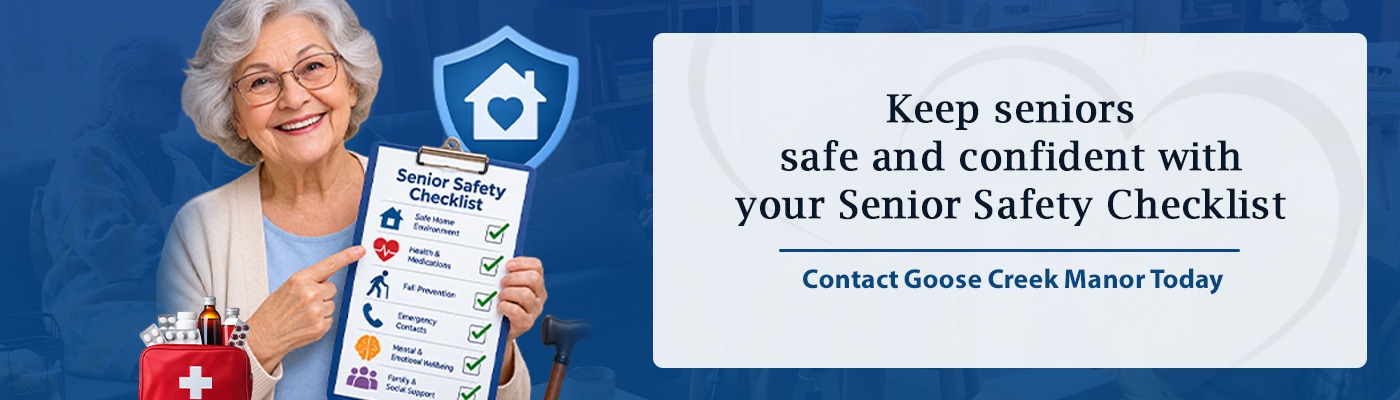
Growing older doesn’t mean giving up independence, but it does mean paying closer attention to a few everyday risks that are easy to overlook. A loose rug, a missed dose of medicine, or a poorly lit staircase can turn into a serious problem faster than most people expect. That’s why having a clear senior safety checklist is so useful, it helps families and seniors spot small issues before they turn into accidents or emergencies. Living independently as you age is possible, and most seniors prefer staying in their own homes for as long as they can. But independence works best when it’s paired with a bit of planning. In this Goose Creek Manor blog, learn briefly about the essential senior safety checklist.
Nobody thinks about the bathroom floor until someone slips on it, that’s the problem. The biggest risks are often the ones people don’t notice until an accident happens. Nobody notices until something goes wrong. A safe home for seniors doesn’t mean padding every corner or removing every rug in the house. It means looking at the spaces where accidents actually happen, bathrooms, stairs, hallways at night and fixing what’s fixable. Here’s the thing: most falls don’t happen because someone was doing something risky. They happen walking to the bathroom at 2 AM, or stepping over a cord that’s always been there. Small stuff.
Walk slowly through your house, going room by room, and look at it as if you are seeing it for the first time. Here are a few things worth checking in every home.
None of this is expensive. A pack of non-slip mats costs less than a nice dinner out. What it prevents is a hip fracture, weeks in a hospital, a long recovery is worth a lot more.

A safe home is half the equation. The other half is daily habits, and this is the part people skip.
These senior living safety tips sound almost too simple to matter, but they’re the habits that quietly prevent the emergencies nobody wants to deal with.
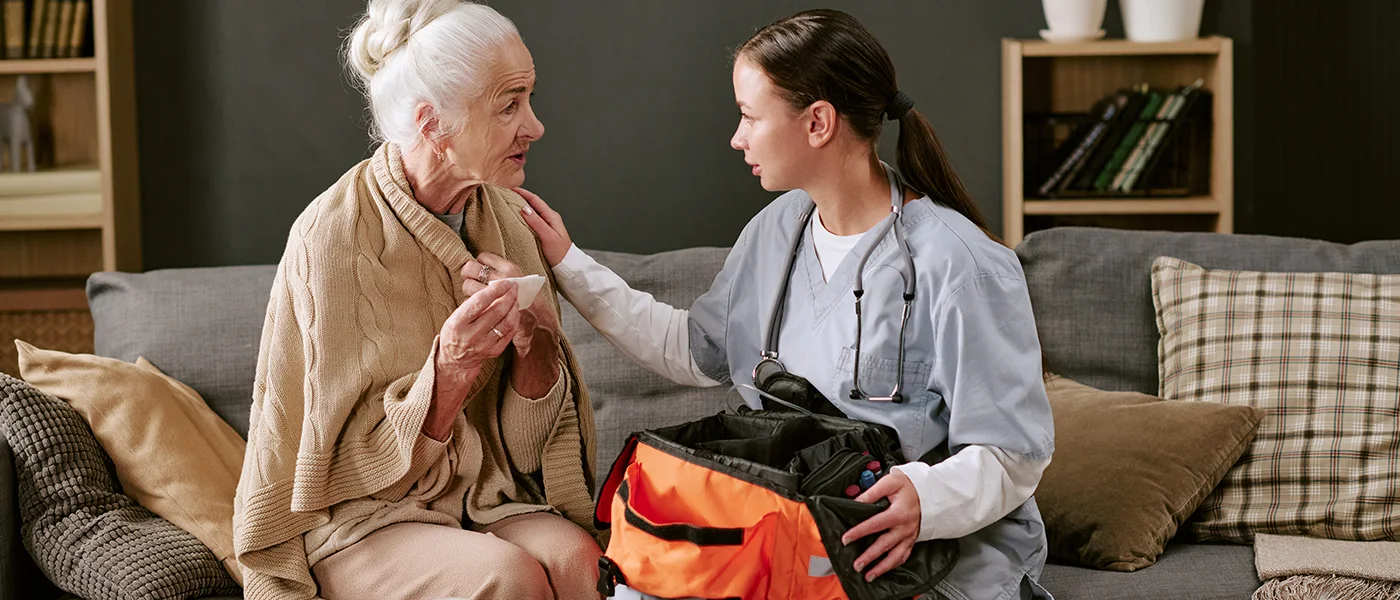
Even a well-prepared home can’t stop every emergency. Someone falls despite every precaution. Emergency preparedness for seniors means having a plan before it’s needed, not scrambling for one during a crisis. That plan can include simple things, like keeping a phone nearby so it’s easy to call for help. A phone left charging in another room may not be much help in an emergency. Some families set up a quick daily text or call, just so someone notices fast if something’s off. A medical alert button works well too, especially the newer ones that detect a fall automatically and call for help even if the person can’t press anything. It’s also worth keeping a small emergency kit somewhere easy to grab: flashlight, spare batteries, a few days of medicine, some snacks that don’t spoil, and a written list of emergency numbers.
A senior checklist only works when it is made for the person and their home, not as a general list for everyone. Someone recovering from knee surgery needs different fixes than someone managing early memory loss. Start small, fix one or two things this month, check back in a few months, and adjust as needs change. The goal is not to remove every possible risk, but to create a safer environment that supports independence. Independent living isn’t about eliminating every risk, that’s not realistic for anyone, at any age. It’s about clearing out the obvious hazards and building a few smart habits, so the people we care about can keep living life on their own terms, just a little more safely.
Look, nobody plans for a fall or a bad slip in the bathroom. It just happens, usually on some random day when everything seemed fine. That’s really why a senior safety checklist matters so much, not because something’s wrong right now, but because a few small fixes today save a lot of pain later. Fix the lighting. Get rid of that one loose rug everyone keeps tripping on. Keep a phone within reach, always. None of this is complicated or expensive. It’s just paying attention to the small stuff before it turns into something bigger. At Goose Creek Manor, we believe safety and independence can go together. Our team is here every day to help you, so you feel comfortable, cared for, and confident at every stage of your life.
How often should someone repeat this safety check?
Every six months is a good habit to stick to, and it’s worth redoing the check right away after any fall, surgery, hospital stay, or new medication. These moments quietly change what’s actually risky in the house, even when nothing looks different on the surface.
Are medical alert devices worth the cost?
Most families do find them worth the cost, especially models with automatic fall detection, since these can call for help on their own even when the person can’t reach a phone, press a button, or speak up and that peace of mind alone often makes the investment feel worthwhile.
How can you discuss safety concerns with a parent without upsetting them?
Keep it about the house, not about them. Say “let’s fix this rug before someone trips” instead of “you shouldn’t be alone anymore.” One sounds like you’re helping out, the other sounds like a verdict on their independence, and that difference is what makes them listen instead of shutting down.
What’s the minimum for an emergency kit?
Flashlight, batteries, a few days of medication, some water and snacks, and emergency numbers written on paper that covers most situations without overcomplicating things.
Does any of this matter if someone lives with family already?
Yes, accidents still happen in shared homes, and a safer layout helps everyone in the house, not just the older person.