
We all heard from our elders that food is medicine. As people reach their seventies, it becomes clear that eating well plays an important role in staying healthy and energetic. As we age, the body needs fewer calories but more nutrients. This simple fact can help seniors make healthier food choices. Healthy eating for seniors is not about strict diets or giving up favorite foods. It’s about small, smart changes that keep the body strong, the mind sharp, and everyday life a little easier.
In this blog post, we will discuss a healthy diet for seniors and how the residential care at Goose Creek Manor provides nutritious, well-balanced meals that support residents health, energy, and overall well-being.
The body does not work the same at 70 as it did at 40, and food needs to shift right along with it. If you understand why your body’s needs change as you get older, it becomes easier to accept the changes you will experience.
Fewer Calories, More Nutrients
As people get older, their metabolism naturally slows, and their daily activity often drops too. That means fewer calories are needed to maintain weight. But vitamin and mineral needs stay the same, or even go up. So, every bite should be full of nutrients. A bowl of sugary cereal and a bowl of oatmeal with fruit might have similar calories, but only one actually fuels the body well.
Muscle Loss, Protein Needs
Muscle mass tends to decline with age, a process doctors sometimes call sarcopenia. This affects balance, mobility, and the risk of falls, not just strength. Eating enough protein, spread across meals rather than saved for dinner, helps slow this loss and keeps seniors steadier on their feet.
Not all nutrients matter equally at every life stage. Healthy nutrition for the elderly focuses on a few key nutrients that are especially important for older adults and can make grocery shopping feel less overwhelming.
Protein Strength
Eggs, fish, beans, yogurt, and lean meats all help maintain muscle and support healing. Older adults often need more protein per pound of body weight than younger adults realize, so adding a source to each meal, even something as simple as a spoonful of peanut butter or a handful of nuts, makes a real difference.
Calcium & Vitamin D for Bones
Bones lose density over time, especially in women after menopause. Dairy products, fortified plant milks, leafy greens, and a bit of safe sun exposure all support bone strength; vitamin D helps the body absorb calcium properly.
Fiber for Digestion
Constipation is common among older adults, often made worse by less activity and certain medications. Whole grains, fruits, vegetables, and legumes keep digestion moving and also help manage blood sugar and cholesterol.
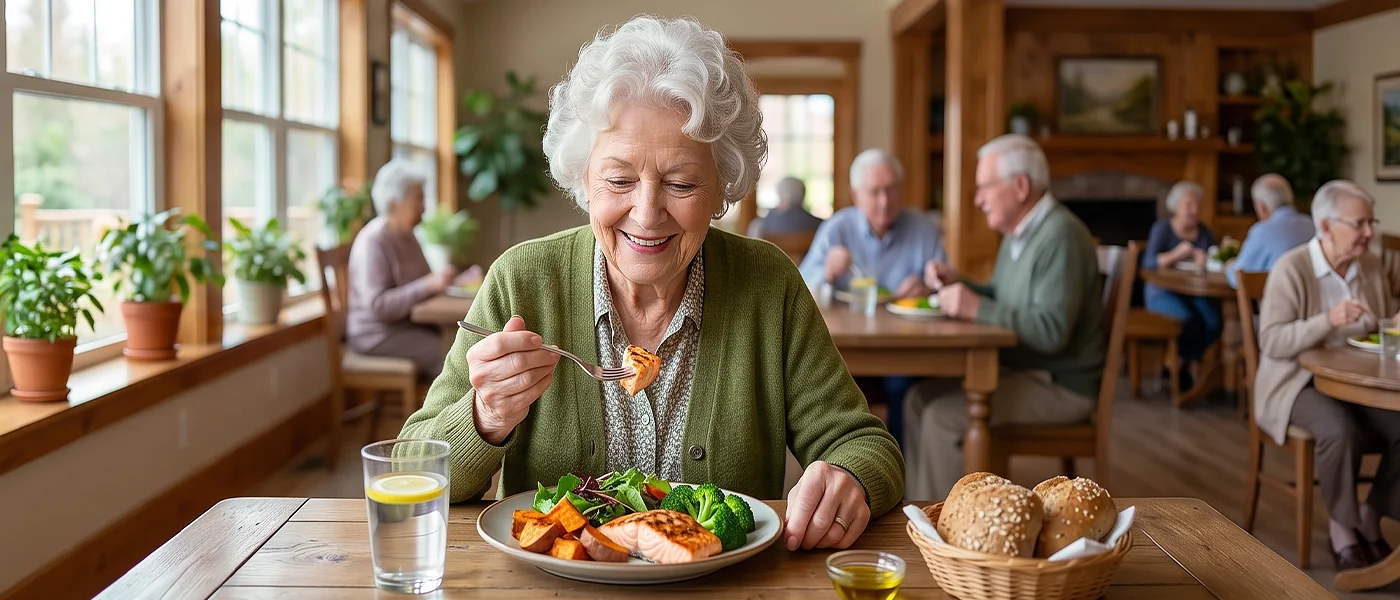
Good intentions do not always translate into good meals. Several real obstacles can get in the way when following a healthy diet for seniors, and recognizing them is the first step to working around them.
Loss of Appetite
Reduced taste and smell, certain medications, or eating alone can all reduce appetite. Smaller, colorful, flavorful meals, using herbs and spices instead of salt, often help spark interest in food again.
Eating Difficulty
Dental issues or swallowing difficulties can make some foods hard to manage. Softer foods like stews, smoothies, or mashed vegetables offer the same nutrients without the struggle.
Medication & Food Interactions
Some medications interfere with nutrient absorption or interact poorly with certain foods, such as grapefruit, and can interact adversely with certain heart medications. A quick chat with a pharmacist about any prescriptions can prevent surprises.
Small, frequent meals can feel like too much, especially with a smaller appetite. Five or six smaller meals throughout the day are often easier to manage and keep energy levels steady.
Staying Hydrated
The sense of thirst weakens with age, so dehydration can sneak up unnoticed. Keeping a water bottle nearby or including soups and water-rich fruits like watermelon helps maintain fluid intake without relying on feeling thirsty.
Cooking for One or Two
Cooking can feel like a chore when meals used to be for a family. Batch cooking on a day off and freezing portions, or sharing meals with a neighbor or friend, can make eating well less of a burden.
Foods Limit
A few foods often cause health problems that are common in older adults. Excess sodium raises blood pressure and strains the heart, so canned soups, deli meats, and packaged snacks deserve a closer look at their labels. Highly processed foods often pack in unhealthy fats while leaving out the fiber the body actually needs.
Eating well later in life does not require a complicated plan or giving up every favorite dish. It comes down to a few consistent habits: enough protein, fiber, water, and smaller portions of the foods that do not serve the body well. Healthy eating for seniors is really about paying attention to what the body needs now, not what worked decades ago. Start with one change this week, whether that’s adding a protein source to breakfast or keeping a water bottle within reach, and build from there. Goose Creek Manor focuses on balanced nutrition, strength, and overall well-being. Our senior living community encourages healthy habits that help older adults stay active, independent, and healthy.
What are the most important nutrients to focus on?
Seniors’ bodies need calcium, vitamin D, vitamin B12, and potassium for good health. If you want to take supplements, talk to your doctor first.
How can seniors reduce their sodium intake?
Too much salt can raise blood pressure and increase the risk of a stroke. Seniors should eat less packaged and processed foods and use herbs, spices, or lemon juice to add flavor instead.
What can seniors do if they have a decreased sense of thirst?
Seniors should drink water and other healthy fluids throughout the day, even if they do not feel thirsty. They can also eat water-rich foods like soup, watermelon, and cucumber to stay hydrated.
Do assisted living facilities take care of healthy eating?
Yes, assisted living communities like Goose Creek Manor provide balanced meals that support seniors’ health. They also consider dietary needs and encourage healthy eating habits to help residents stay active and feel their best.
What foods should seniors avoid eating?
Seniors should eat fewer processed foods, salty snacks, sugary drinks, and fried foods. Choosing fresh and balanced meals more often can help support better health and energy.